


|
|
|||
 |
|||
| Log In | |||
|
|||
|
|||
|
| |||
|
|||
|
| |||
|
|||
| |||
|
|||
| |||


Features
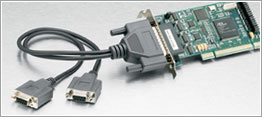
DescriptionQuatech RS-422/485 UPCI boards completely meet the PCI 2.3 specification for Universal connectivity and Low Profile boards, as well as all other aspects of the specification so that you can be certain that every Quatech Universal PCI board will function properly and perform reliably in your system. Serial port connections are made via an onboard DB-9 female port for single port models, and via the included cables providing two DB-9 female connectors for two port boards. The new Low Profile PCI footprint was designed to provide greater flexibility for embedded systems, thin-clients, and desktop and server environments. The boards are mechanically similar to standard PCI boards, but use a shorter board and a different mounting bracket. They are designed to fit into systems as low as 3.350" without using riser cards. The boards are built on 32-bit addressing, and can be used in standard PCI backplanes or with specialized Low Profile PCI brackets. Quatech's RS-422/485 boards are built using the smallest (MD1) Low Profile board specification, which allows them to be used in even the smallest size systems without riser cards. PCI 2.3 requires that all plug-in cards support 3.3V signaling. However, many systems still use 5V signaling. To accommodate both system types, Quatech Low Profile boards also use a Universal PCI connector compatible with both 3.3V and 5V signaling. This means that they can be used with current equipment, and will not need to be replaced as systems are upgraded. It also means that a single serial board solution can be used across a diverse network comprised of many different types of computer. Each port on the board can be configured as either RS-422 or RS-485 for full or half-duplex communication. It is implemented with an automatic RS-422/485 transmitter enable/disable function that permits the hardware itself to regulate data flow by only driving lines while actively transmitting--providing increased speed and convenience over the older software controlled method. |
||||||||||

 |
 |
|||
|
|
|
 |