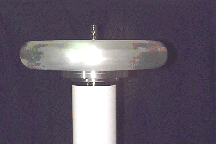
High Voltage Dividers are used to reduce high voltage signals to levels which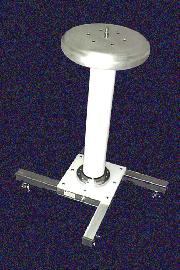 can safely be measured by either conventional multimeters or specialized instruments such as oscilloscopes, peak voltmeters or digital recorders/analyzers. These dividers are available in different designs. The divider type depends on the voltage waveform to be measured. can safely be measured by either conventional multimeters or specialized instruments such as oscilloscopes, peak voltmeters or digital recorders/analyzers. These dividers are available in different designs. The divider type depends on the voltage waveform to be measured.
Type of Dividers
Four types of dividers are available (which measure different waveforms)
- AC voltage dividers
- DC voltage dividers
- impulse voltage dividers
- combined, je, AC & impulse or AC,DC & Impulse
Divider Construction
From the construction point of view the following designs are used for dividers:
- capacitive design (C): suitable for AC and switching impulse voltages
- damped capacitive (RC): suitable for AC, lightning & switching impulse voltages
- resistive (R): suitable for DC voltage (high resistance - Meg Ohm) and lightning impulse (10w resistance - k Ohm)
- parallel R damped capacitive (RCR): suitable for AC, DC, lightning & switching impulse voltages

Voltage divider components
- high voltage arm (one or more sections in series)
- low voltage arm (secondly unit)
- measuring coaxial cable and termination
The high voltage and low voltage arms are usually mounted together on a base (fixed or mobile). The termination is placed at the end of the coaxial cable and it may have several outputs for several divider ratios.
Typical Voltage Ratings
The following table shows typical nominal voltage ratings of one section of the high
voltage arm. One or more sections in series may be used, depending on the amplitude of the measured voltage.
| Divider Type |
Section Nominal Voltage (kV) |
| |
AC |
DC |
Lightning Impulse |
Switching
Impulse |
| capacitive (C) } |
60 |
|
|
120 |
| damped capacitive(RC) |
60 |
|
175 |
120 |
| resistive (high resistance-MOhm) |
|
100 |
|
|
| resistive (low resistance -kOhm) |
|
|
200 |
|
parallel R damped
capacitive (RCR) |
60 |
100 |
175 |
120 |
Features
- compact, lightweight and mobile design
- designs available to measure AC or DC or impulse (switching, lightning and steep front) or a combination of several voltage types.
- internal compensation to minimize oscillations during impulse measurements
- indoor voltage divider that can be retrofitted for outdoor use
- individual HV sections are stackable to accommodate the desired voltage
- custom made ratings, ratios and input/output impedances available
- maximum rise time of 20 ns and minimum impulse response time of 35 ns with less than 15% overshoot available
Applications
Voltage dividers are suitable for:
- laboratory use in universities, research and high voltage facilities
- assembly line or product approval testing in manufacturing plants
- outdoor short and long term field measurements on electrical systems
- use with fiber measuring systems
Design
- the High Voltage housing is comprised of electrical grade fiber glass tubes.
- transformer oil or SF6 insulating gas can be used as the insulating medium.
- capacitors are of either oil-paper or solid dielectric design.
- external polymeric housing and sheds can be added for outdoor use.
- the secondary circuit incorporates temperature stable resistors and capacitors, arranged in a coaxial design.
- BNC, LEMO or RF connectors are available.
|
Typical Specifications
A. Electrical
- 60 kV rms continuous
- 100 kV DC continuous
- 120 kV switching impulse
- 175 kV lightning impulse
- 200 kV steep front impulse
B. Mechanical/Physical
- 120 mm diameter
- 1.5 m height (incl. base)
- 15 kg weight (SF6 filled)
|
Ordering Information
- Type of divider
- Nominal voltage rating
- ratio
- input and output impedance
- step response and rise time
- cable connector type
- cable length
- indoor or outdoor use
- insulating medium (oil, SF6,resin)
- stationary or mobile base
|
|